
No Hot Water in the Shower: Boiler, Thermostatic Valve or Plumbing Issue?
Quick Answer: If there’s no hot water in the shower, the first thing to do is check the other hot taps in your house. If they run hot normally, the problem is likely local to the shower, such as a faulty thermostatic valve, blocked cartridge, low water pressure or restricted water flow. If there’s no hot water from any tap, the issue is more likely related to the boiler or wider hot water supply, potentially involving low boiler pressure, incorrect settings or a faulty diverter valve. Avoid opening or repairing internal boiler components yourself. If the cause isn’t obvious from basic checks, contact a qualified plumber or Gas Safe registered heating engineer for professional diagnosis.
You turn the shower on, wait for it to warm up and… nothing. Just cold or lukewarm water.
When there’s no hot water in the shower, is it a boiler, thermostatic valve or plumbing issue? That’s the question we want to help you answer, because replacing or repairing the wrong component can quickly become an unnecessary expense.
The first thing we check is surprisingly simple: is there hot water anywhere else in the house?
If your hot tap runs perfectly fine but the shower stays cold, the problem is probably localised to the shower valve, mixer or plumbing. If other taps are cold too, we start looking more closely at the boiler, hot water supply or water cylinder.
At WPJ Heating, we deal with both heating and plumbing problems across London, and we’ve learnt that good fault-finding is about following the clues rather than immediately blaming the boiler.
Here’s how to narrow down the most common causes.
First, Check the Other Hot Taps
Before changing your boiler settings or trying to fix anything, turn on a hot tap in the bathroom or kitchen.
Give it enough time for the hot water to reach the tap.
If other taps run hot
If your taps have hot water but the shower doesn’t, your domestic hot water supply is clearly working somewhere in the house.
That points us towards a more local issue, such as:
- A faulty or stuck thermostatic shower valve
- A blocked shower filter
- Limescale or debris inside the cartridge
- Low water pressure or an imbalance between supplies
- A partially closed service valve
- Trapped air or an airlock in the pipes
- Another restriction affecting water flow to the shower
If other taps run cold
If there is no hot water from the shower or the taps, the issue is more likely to sit within the central hot water system.
Depending on your heating system, possible causes include low boiler pressure, incorrect settings, a power cut, a faulty diverter valve or a problem with a hot water heater or cylinder.
That simple tap test can save a lot of guesswork.
Could the Boiler Be Causing the Cold Shower?
Yes. If your hot water has stopped throughout the house, the boiler is one of the obvious places to investigate.
Modern boilers have multiple components responsible for heating and controlling your domestic hot water. If something goes wrong, the heating may still work even though your hot water does not.
Check the boiler display first
Look at the boiler without removing its cover.
Can you see any error codes? Is the display completely blank? Does the boiler respond when you open a hot tap?
If the display is dead, check whether there has been a power cut or whether an accessible power switch has been turned off. If the boiler has power, check its user-accessible settings, timer and thermostat controls against the manufacturer’s instructions.
Incorrect settings can sometimes create what looks like a much bigger hot water issue.
Never remove the boiler cover or attempt to inspect or repair internal components yourself.
Check the boiler pressure
Next, look at the boiler pressure reading.
Many sealed heating systems operate at around 1 to 2 bar when cold, although the correct pressure depends on the appliance and system. Always check the manufacturer’s instructions rather than treating 1 to 2 bar as a universal rule.
If the pressure is too low, some boilers may not operate correctly and can display an error code or lock out.
Repeatedly losing pressure is another matter. If you keep having to top the boiler up, there could be a leak or another problem within the heating system that needs professional attention.
Could It Be a Faulty Diverter Valve?
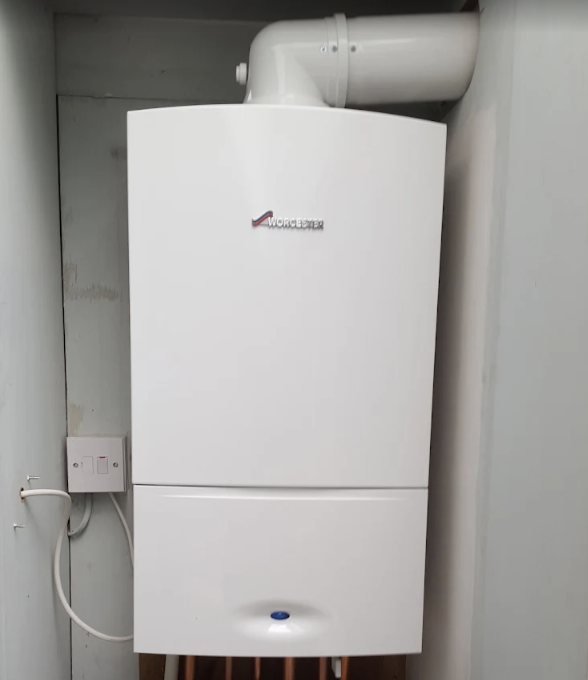
If you have a combi boiler and your heating works but your hot water doesn’t, the diverter valve is one component an engineer may investigate.
A diverter valve directs heated water to where it is needed. In a combi boiler, it helps switch between the central heating circuit and supplying heat for your hot taps.
Over time, the valve or its actuator can become worn or stuck.
A faulty diverter valve can therefore create situations where the radiators get warm but the hot water running from the taps remains cold or lukewarm.
That does not mean every cold shower is caused by a broken diverter valve. There are several possible causes with similar signs, so proper diagnosis matters.
Repairing or replacing an internal boiler diverter valve is a job for a suitably qualified professional, not a DIY fix.
What If the Boiler Seems Fine but the Shower Is Cold?
This is where the diagnosis changes.
If you have good hot water from the bathroom basin, kitchen taps or bath but your shower stays cold, the boiler is clearly producing hot water.
The shower valve then becomes one of our main suspects.
How does a thermostatic shower valve work?
A thermostatic shower combines hot and cold water to maintain the temperature you choose.
Many thermostatic cartridges use a temperature-sensitive element, often involving wax technology, which reacts to temperature changes and adjusts the mixture of hot and cold water.
The important point for you is that the thermostatic valve needs suitable hot and cold supplies to work correctly.
If the valve becomes stuck or the cartridge is damaged or restricted, it may prevent the hot water from mixing correctly.
Signs of a faulty thermostatic valve
Look out for:
- Other taps are hot but the shower is cold
- The shower only produces lukewarm water
- Turning the temperature control makes little difference
- The shower suddenly becomes hotter or colder
- Temperature fluctuates while other taps remain stable
- Water flow has become weaker
- The temperature control feels unusually stiff or stuck
When we see those symptoms with a perfectly good hot water supply elsewhere, we would normally investigate the shower before assuming the boiler needs repair.
Can Limescale Block a Thermostatic Shower?
It can.
This is particularly relevant in hard-water areas such as London.
Over time, calcium deposits and other debris can accumulate inside shower heads, filters and thermostatic cartridges. Internal mixing valve components can also become restricted, affecting both flow and temperature control.
You can safely inspect an accessible shower head for visible scale and clean it according to its manufacturer’s instructions.
Taking apart a concealed thermostatic valve is different. If you are unsure how the shower is isolated or assembled, calling a plumber is safer than turning a relatively small problem into a leak behind the wall.
Does Water Pressure Affect Shower Temperature?
Definitely.
A thermostatic shower relies on its hot and cold water supplies being suitable for the valve and installation. Significant pressure or flow differences can interfere with the way the shower mixes the two.
That means what looks like a temperature problem can actually be a water pressure or water flow problem.
Possible causes include:
- Low water pressure
- Restricted pipes
- Blocked shower filters
- Partially closed service valves
- Limescale inside the valve
- Poor hot water flow
- A pump issue on systems using one
- Leaks reducing available pressure or flow
If the shower has become weaker at roughly the same time it became colder, make a note of that. It is a useful clue for your plumber or heating engineer.
Can Trapped Air Cause Hot Water Problems?
Sometimes.
Trapped air or an airlock can restrict water flow through parts of a plumbing system. This may be more likely after plumbing work, a system has been drained, or changes have been made to the water supply.
The important distinction is whether the problem affects one outlet or the entire house.
If one shower suddenly has poor hot water flow after plumbing work but nearby taps are fine, a local flow restriction may be worth investigating.
If all the taps have stopped running hot, the boiler or central hot water system deserves more attention.
What About Frozen Pipes?
During very cold weather, frozen pipes can disrupt the water supply and stop water reaching an outlet correctly.
The exact symptoms depend on which pipe has frozen. Reduced or completely stopped water flow during freezing conditions is an obvious warning sign.
Some condensing boilers can also stop working if their condensate drainage freezes, although that is different from a frozen hot water pipe.
If you suspect a frozen pipe, avoid aggressive heating methods such as naked flames. If you cannot identify and safely resolve the problem, get professional help.
Could a Heating Element Be the Problem?
If your property uses an electric water heater, immersion heater or hot water cylinder with an electric element, a failed heating element can leave you with cold water.
That is a different fault from a gas boiler problem.
If the shower and taps are cold but your central heating works normally, it is worth establishing exactly how your property produces domestic hot water before assuming the boiler is responsible.
This is another reason we always start with the system rather than the symptom.
Why Does My Shower Keep Going Hot and Cold?
Temperature fluctuations are frustrating because they can have several causes.
The thermostatic shower valve may be struggling to maintain the correct mixture. Alternatively, the hot water supply itself may be fluctuating because of a boiler, pressure or flow issue.
Try this simple comparison.
When the shower temperature becomes unstable, check whether another hot tap also has inconsistent temperature.
If both fluctuate: investigate the boiler or wider hot water system.
If only the shower fluctuates: investigate the shower valve, pressure balance and local plumbing.
It isn’t a perfect diagnosis, but it gives an engineer a much better starting point.
What Can I Safely Check Myself?
There are several checks you can make without opening a boiler or dismantling your plumbing:
- Test hot taps elsewhere in the house
- Check the boiler display for error codes
- Check boiler pressure against the manufacturer’s guidance
- Confirm the boiler has power
- Check user-accessible timer, thermostat and hot water settings
- Look for visible leaks
- Check whether shower flow has recently changed
- Inspect an accessible shower head for limescale
- Think about whether the issue started after recent plumbing work
These observations can help an engineer find the solution faster.
What you should not do is remove the boiler casing or attempt to repair gas or internal boiler components yourself.
HSE guidance states that anyone employed to work on domestic gas appliances must be Gas Safe registered and competent for the particular work involved. If you suspect a gas appliance is unsafe, turn it off and do not use it until it has been checked by a Gas Safe registered engineer.
When Should You Call a Boiler Engineer or Plumber?
Call for professional help when the problem persists, you cannot identify the cause safely, or there are signs of a more significant fault.
A boiler or heating engineer is generally the right direction if:
- There is no hot water anywhere
- The boiler shows persistent error codes
- Boiler pressure keeps falling
- The heating works but hot water does not
- A diverter valve or another internal component is suspected
- The boiler repeatedly locks out
A plumber or shower specialist may be more appropriate when:
- Other taps run hot but the shower remains cold
- The thermostatic valve appears stuck
- Shower flow has significantly reduced
- You suspect blocked filters or pipework
- There is a significant water leak
- The problem started following plumbing work
Significant leaks should be dealt with promptly to reduce the risk of water damage.
If you suspect a gas leak, treat that differently. HSE advises calling the National Gas Emergency Service on 0800 111 999, opening doors and windows, and turning off the gas at the meter control valve if you know how to do so safely.
No Hot Water in the Shower? Start With the Simple Checks
When there’s no hot water in the shower, the solution isn’t automatically to replace the boiler.
Start by testing the other taps.
If your hot taps work fine, focus on the shower valve, water pressure, flow and local plumbing. If there is no domestic hot water anywhere, check the boiler’s power, pressure, settings and display before arranging professional diagnosis.
And if the heating works but your hot water does not, components such as the diverter valve may need to be investigated.
At WPJ Heating, we deal with both boiler repairs and plumbing problems across London, so you do not need to know the exact cause before getting in contact. A proper diagnosis can establish whether the problem is the boiler, thermostatic shower valve or plumbing and help you resolve it without replacing components unnecessarily.
Persistent hot water issues usually deserve professional investigation rather than repeated resets and temporary fixes. Good maintenance can also help keep your heating system operating safely and efficiently over the long term.