

How to Top Up a Vaillant Boiler: Step-by-Step Guide
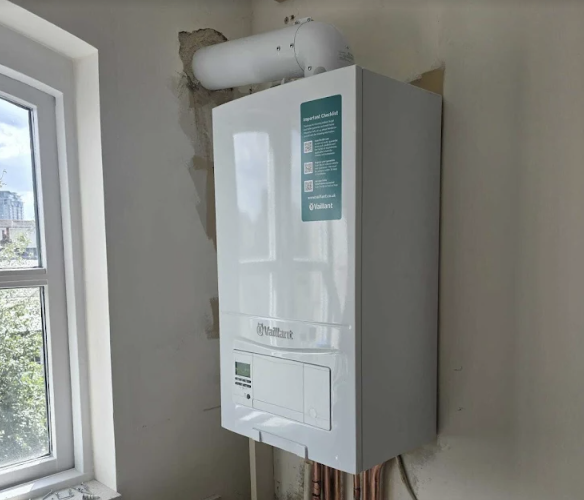
Quick Answer: To top up a Vaillant boiler, switch the boiler off and allow it to cool, then check the pressure gauge and locate the filling loop or built-in filling device. Slowly open the filling valve and watch the pressure rise, stopping when it reaches the level recommended for your model, which is typically around 1 to 1.5 bar when cold. Close the valve fully, turn the boiler back on and monitor the pressure. If it keeps dropping, this could indicate a leak or another fault that should be checked by a qualified heating engineer.
If your Vaillant boiler has stopped working and the pressure looks lower than usual, it may simply need repressurising. The good news is that this is something homeowners can often do themselves without touching any of the boiler’s gas components.
At WPJ Heating, we regularly deal with boiler pressure problems, and one thing we’ve learned is that topping up the system is only half the story. You also need to understand why the pressure dropped in the first place.
Here’s how to top up a Vaillant boiler, what pressure to aim for and when it’s better to call an engineer.
What Pressure Should a Vaillant Boiler Be?
Your boiler needs sufficient water pressure to circulate hot water around your central heating system.
Vaillant’s general homeowner guidance indicates that around 1 to 1.5 bar is typically the level to aim for when repressurising a boiler. However, the correct Vaillant boiler pressure can vary between models, so always check the instructions for your particular Vaillant boiler.
You can usually see the pressure on either an analogue gauge or the boiler’s digital display.
If the pressure has fallen too low, you may notice:
- No heating or hot water
- A low reading on the pressure gauge
- A fault code on the boiler
- The boiler failing to start normally
For example, Vaillant’s F22 fault code is a low-pressure error, and topping up the water pressure will typically clear it, although there are other possible causes.
Why Does Boiler Pressure Drop?
If your Vaillant boiler pressure has dropped slightly, it’s usually nothing to worry about unless it keeps happening.
Pressure can fall after bleeding your radiators, for example, because you’ve released air and potentially some water from the heating system.
However, if your boiler regularly loses pressure, there may be several reasons for this, including leaks and sludge buildup caused by insufficient inhibitors in the boiler system. If the pressure suddenly dropped from around 1.5 to 0.5 bar, that can mean the system has lost roughly three litres of water and may point to a major leak.
Before topping it up, have a quick look around your radiators, valves and visible pipework for:
- Water or damp patches
- Dripping radiator valves
- Rust or staining
- Moisture around the boiler or heating pipes
If you can see a leak, repressurising the system won’t fix the cause. Small pressure changes can happen after normal maintenance, but a visible leak needs attention. That’s when it’s worth arranging a boiler repair.
How to Top Up a Vaillant Boiler
The exact filling mechanism varies between Vaillant models, so check your boiler’s operating instructions before starting; this step-by-step process is essential to follow correctly to avoid overfilling or other pressure issues.
1. Turn the Boiler Off
Switch the boiler off and allow the heating system to cool.
Pressure naturally increases when the system heats up, so checking it while cold gives you a more reliable starting point.
2. Find the Filling Loop
Locate your boiler’s filling mechanism.
Some systems have an external filling loop, often a silver braided hose underneath or near the boiler. Other Vaillant models may use an integrated filling device. Some modern Vaillant models use an internal filling loop with two valves; parts may be covered by a flap or harder to see if the boiler is inside a cupboard.
If you’re not sure which valve or filling mechanism to use, don’t guess. Check the manual for your exact model first. Older setups may use a filling key, while some valves need a flat head screwdriver to operate.
3. Check the Pressure
Look at the pressure gauge before you begin adding water.
For many systems, you’ll be aiming for approximately 1 to 1.5 bar while cold, which is the typical level for many Vaillant models and the correct pressure levels to aim for, in line with Vaillant’s general guidance. Your boiler’s own instructions should take priority.
4. Open the Filling Valve Slowly
Following the instructions for your model, slowly open the filling valve or, on models with two valves or taps, open the first valve slowly and, if required by the design, open the second valve gradually.
Handle-style valves are typically opened anti-clockwise to allow water flow.
You should hear water flow into the heating system.
Keep watching the pressure gauge as you do this. There’s no need to rush because the pressure can increase quite quickly.
5. Close the Valve at the Correct Pressure
Finally, once the pressure reaches the recommended level, fully shut the filling valve. If a valve is left open, the pressure can keep rising.
Don’t deliberately add extra pressure “just in case”. More pressure doesn’t make the boiler work better and could cause the boiler to shut down or leave the system overpressurised.
6. Turn the Boiler Back On
Switch your boiler back on and check whether it is operating normally.
If your model requires a reset following a low-pressure fault, remember that low pressure can trigger an error, and some Vaillant models use a reset button marked with a flame symbol, so follow the manufacturer’s reset instructions.
If the boiler does not restart and appears to have shut down, check the manual first and seek assistance if needed.
Then keep an eye on the pressure over the following few days.
What If You Put Too Much Pressure in a Vaillant Boiler?
If you’ve accidentally overfilled the system, don’t panic or worry if the pressure is only slightly above normal after filling, as it can rise as the central heating warms up.
Remember that boiler pressure also rises naturally as the central heating warms up, and the pressure release valve may let water escape if excess pressure builds up.
If the pressure is already unusually high while the system is cold, or continues rising beyond its normal operating range, it’s best to get professional advice rather than trying to diagnose the problem yourself, as a professional may need to adjust the system or investigate a faulty expansion vessel or pressure release valve if lowering the pressure is still needed.
Why Does My Vaillant Boiler Keep Losing Pressure?
This is where topping up stops being the solution.
If you repressurise the boiler and the pressure drops again shortly afterwards, there could be a leak or another fault within the heating system, which can lead to poor performance and less efficient heating.
Repeatedly adding water might temporarily get the heating running again, but it doesn’t address the underlying problem.
We often advise customers to think of low pressure as a symptom rather than the fault itself. If you’re topping up your Vaillant boiler every few days or weeks, the system should be inspected by a qualified engineer if the pressure keeps dropping.
You can find more information about professional maintenance through our boiler servicing service.
Do You Need to Top Up After Bleeding Radiators?
Sometimes.
Bleeding a radiator releases trapped air from your heating system, and the system pressure may fall as a result.
Once you’ve finished bleeding your radiators and the system has cooled, check the boiler pressure. If it’s below the recommended level, repressurise the system according to your Vaillant instructions.
Can You Top Up a Vaillant Boiler Yourself?
Repressurising a boiler through its designated filling mechanism is something many homeowners can do themselves, provided they follow the manufacturer’s instructions and feel confident doing so.
However, topping up a boiler isn’t the same as repairing one.
Never remove the boiler casing or interfere with gas components yourself.
Call a qualified engineer if:
- The pressure keeps falling
- You’ve found a leak
- The pressure becomes unusually high
- The boiler still shows a fault after repressurising
- You can’t identify the correct filling mechanism
- You’re unsure about any part of the process
If you smell gas or suspect a gas-related problem, don’t attempt to resolve it by repressurising the boiler.
How Often Should You Need to Top Up a Vaillant Boiler?
There’s no set schedule for topping up a boiler.
You may occasionally need to restore the pressure, particularly after bleeding radiators. What isn’t normal is constantly having to do it.
If the pressure keeps disappearing, there are several reasons this can happen, and repeated top-ups should not be treated as normal.
Rather than repeatedly topping up the system, have a heating engineer investigate the cause.
Need Help With Your Vaillant Boiler?
Knowing how to top up a Vaillant boiler can help you deal with a straightforward low-pressure problem without unnecessary stress.
The process is relatively simple: check the pressure when the system is cold, identify the correct filling mechanism, slowly add water and stop when you’ve reached the pressure recommended for your model.
But keep an eye on what happens afterwards.
If the pressure falls again, your boiler may be telling you that something else needs attention.
At WPJ Heating, we provide boiler servicing, repairs and heating services across London, including support for Vaillant heating systems. If a quick top-up hasn’t solved the problem, our experienced heating engineers can help identify what’s actually causing it.
You can also visit our office or read our blog section for further information.
Quick Recap
To top up your Vaillant boiler:
- Turn the boiler off and let it cool.
- Check the current pressure.
- Locate the correct filling loop or device.
- Open the filling valve slowly and correctly, using the right sequence if your model has more than one valve.
- Watch the pressure gauge.
- Stop at the pressure recommended for your model.
- Close the filling valve completely so the boiler does not shut down again from a pressure issue.
- Turn the boiler back on.
- Monitor the pressure afterwards.
If the pressure keeps dropping, don’t just keep topping it up. Get the underlying problem checked by professionals.
Disclaimer: This article provides general homeowner guidance. Vaillant boiler models and filling arrangements vary, so always follow the manufacturer’s instructions for your specific boiler. Do not remove the boiler casing, interfere with gas components or attempt repairs you are not competent to carry out. If you’re unsure, contact a Gas Safe registered engineer.