

How to Re-Pressurise Your Worcester Bosch Boiler
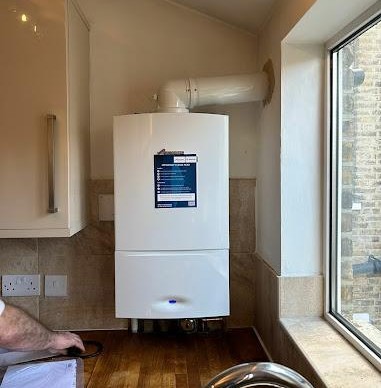
If you’ve noticed your Worcester Bosch boiler has stopped producing heating or hot water, don’t assume the worst. One of the most common causes is low boiler pressure, and in many cases, it’s something you can resolve yourself in just a few minutes.
As heating engineers, we’ve attended countless call-outs where homeowners thought they needed a new boiler, only to discover the system simply needed repressurising. While it’s an easy job, it’s important to do it correctly to avoid over-pressurising the system or overlooking a more serious issue.
In this guide, we’ll explain how to repressurise your Worcester Bosch boiler, why boiler pressure drops, how to recognise the warning signs, and when it’s time to call a Gas Safe registered engineer. Whether your boiler uses an external filling loop, an internal filling key, or a modern keyless filling link, we’ll walk you through the process step by step.
What Is Boiler Pressure?
Your heating system relies on the correct amount of water circulating through the boiler and radiators. The boiler pressure ensures that heated water reaches every part of your home efficiently.
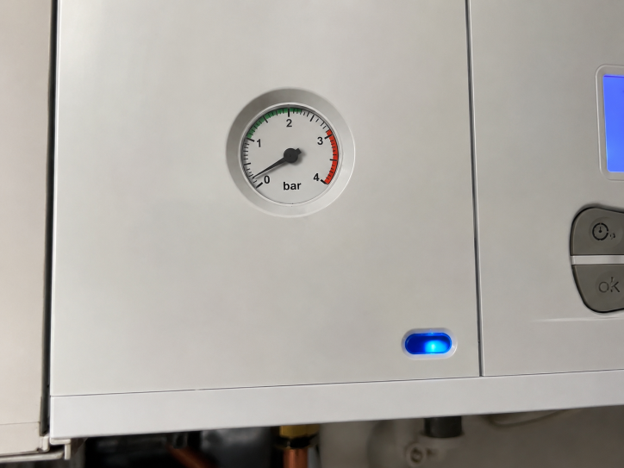
Most Worcester Bosch boilers display this using either a pressure gauge, water pressure gauge, hydraulic dial, or a digital reading. When the system is cold, the pressure should usually sit between 1 and 1.5 bar.
If the gauge falls below 1 bar, your boiler may display a fault code, stop providing hot water, or shut down altogether to protect itself.
Fortunately, restoring the pressure is often straightforward.
Why Does Boiler Pressure Drop?
Many homeowners think their boiler should never lose pressure, but that’s not quite true. Topping up the system once or twice a year is generally considered normal.
However, if the pressure drops regularly, there’s usually an underlying cause that needs investigating.
The most common causes include:
- Bleeding radiators, which releases trapped air and lowers the system pressure.
- Small leaks from radiator valves, joints or pipes.
- A faulty pressure relief valve.
- Problems with the expansion vessel.
- Hidden leaks within the heating system.
- Frozen condensate pipes during very cold weather.
If your low boiler pressure keeps returning, repeatedly topping it up isn’t the answer. It’s worth arranging for a qualified heating engineer to inspect the system.
Signs Your Worcester Bosch Boiler Needs Re-Pressurising
The good news is that Worcester Bosch boilers usually make it obvious when the pressure is too low.
You may notice:
- The pressure gauge is below 1 bar.
- A low-pressure warning or fault code appears.
- Your heating isn’t warming the house properly.
- You have little or no hot water.
- The boiler locks itself out.
If the pressure sits within the recommended range, there’s no need to add more water.
Before You Begin
Before you start repressurising, take a couple of minutes to prepare.
We recommend that you:
- Turn the boiler off.
- Allow the system to cool.
- Place an old towel or another towel underneath the boiler to catch any drips.
- Check your manufacturer’s booklet if you’re unsure which filling system your model uses.
A few drops of water escaping during the process is perfectly normal.
Which Filling System Does Your Worcester Bosch Boiler Have?
Most Worcester Bosch models use one of two filling methods.
External Filling Loop
An external filling loop is usually a flexible silver braided hose located beneath the boiler.
You’ll typically find:
- A braided filling loop
- Two valves
- Isolation controls on either end
Many older Worcester boiler models use this arrangement.
Internal Filling System
Newer modern combi boilers often have an internal filling mechanism instead.
Depending on your model, this may include:
- An internal filling key
- A white plastic key
- A blue lever
- A white square
- A white square clockwise control
- A black plastic filling mechanism
- A keyless filling link
Although the appearance differs, they all perform the same job by allowing cold mains water into the boiler system.
How to Re-Pressurise Your Worcester Bosch Boiler Using an External Filling Loop
If your boiler has an external filling loop, follow these steps.
Step 1: Turn Off the Boiler
Always switch the boiler off before you begin.
This allows you to get an accurate pressure gauge reading and prevents water circulating while you’re topping the system up.
Step 2: Locate the Filling Loop
Find the silver braided hose beneath the boiler.
Place your towel underneath before opening anything.
Locate the two valves connected to the hose.
Step 3: Open the Valves
Slowly gently turn the first valve.
Next, open the second valve.
You’ll hear cold mains water flowing into the system.
Watch the water pressure gauge carefully as the pressure begins to rise.
Avoid opening the valves fully, as filling too quickly makes it easier to over pressurise the boiler.
Step 4: Reach the Correct Pressure
Continue watching the gauge.
As soon as it reaches between 1 and 1.5 bar, close both valves immediately.
Return them to their original position.
This is the correct pressure for most Worcester Bosch models when cold.
How to Re-Pressurise Using an Internal Filling Key
Some Worcester Bosch boilers don’t use a braided hose.
Instead, they use an internal filling key or integrated filling controls.
The process is just as simple.
Insert the Filling Key
Insert the white plastic key into the designated small hole beneath the boiler.
Depending on your model, you may need to:
- Firmly push the key into place.
- Turn the white square clockwise.
- Operate the blue lever.
- Use the keyless filling link.
Once the key is secure, slowly allow water into the system.
Keep watching the pressure gauge throughout.
Close Everything Securely
As soon as the pressure reaches the recommended level:
- Close the filling control.
- Remove the filling key.
- Return all controls to their original position.
Don’t be surprised if a few drops of water escape when removing the key. That’s perfectly normal.
Restarting Your Boiler
Once you’ve finished repressurise a Worcester Bosch boiler, turn the appliance back on.
Some models will restart automatically, while others require you to press the reset button.
If the boiler starts normally and the pressure remains stable, you’re good to go.
However, if the fault code remains or the pressure immediately begins to fall again, there’s likely to be another issue affecting the system.
Why Does My Boiler Keep Losing Pressure?
Repressurising your boiler every now and then is perfectly normal. In fact, most homeowners only need to top up their system once or twice a year.
However, if you’re having to do it every few weeks, it’s usually a sign that something else is wrong.
At WPJ Heating we’ve found that recurring low pressure is often caused by an issue elsewhere in the heating system, not the boiler itself. While repressurising will get your heating back on temporarily, it won’t solve the underlying problem.
Here are the most common reasons your boiler pressure keeps dropping.
Bleeding Radiators
One of the simplest explanations is that you’ve recently been bleeding radiators.
Using a radiator key to release trapped air improves the efficiency of your heating, but it also allows a small amount of water to escape. As a result, the water pressure naturally falls.
After bleeding your radiators, it’s normal to need to top the system back up.
If your radiators regularly fill with trapped air, though, it’s worth asking a heating engineer to investigate, as this can indicate another issue within the system.
A Leak in the Heating System
Even a small leak can gradually reduce the pressure inside your boiler system.
Look out for signs such as:
- Damp patches on ceilings or walls.
- Water around the boiler.
- Dripping pipes.
- Leaking radiator valves.
- Wet flooring near radiators.
Some leaks are hidden beneath floors or inside walls, making them much harder to detect.
If you suspect a leak around the boiler itself, it’s important to contact a Gas Safe registered engineer rather than continuing to repressurise the system.
Faulty Pressure Relief Valve
A faulty pressure relief valve is another common cause of repeated pressure loss.
This safety valve is designed to release water if the system becomes over-pressurised. If it becomes worn or damaged, it can allow water to escape continuously, even when the pressure is normal.
Common signs include:
- Water dripping from the discharge pipe outside.
- Pressure dropping shortly after topping the boiler up.
- Frequent low-pressure error codes.
This isn’t something homeowners should attempt to repair themselves and should always be checked by a qualified professional.
Expansion Vessel Problems
Your boiler’s expansion vessel absorbs the natural expansion of water as it heats up.
If the vessel loses its air charge or develops a fault, you’ll often notice the pressure rising when the heating is on and dropping again once it cools down.
This can result in:
- Repeated pressure loss.
- Boiler lockouts.
- Inconsistent heating performance.
- Frequent need for repressurising.
An expansion vessel should always be inspected by a qualified heating engineer.
When Should You Call a Gas Safe Engineer?
Although repressurising a boiler is usually straightforward, there are times when it’s best to leave the job to a professional.
We recommend contacting a Gas Safe-registered engineer if:
- The pressure regularly drops below 1 bar.
- You repeatedly need to top the system up.
- You suspect a leak around the boiler.
- Your boiler won’t restart after pressing the reset button.
- Error codes remain after repressurising.
- You have no heating or hot water.
- You’re unsure which filling system your Worcester Bosch boiler uses.
Getting the issue diagnosed early can often prevent a much larger repair later.
Frequently Asked Questions
What pressure should my Worcester Bosch boiler be?
Most Worcester Bosch boilers should read between 1 and 1.5 bar when the system is cold. Always refer to your manufacturer’s booklet, as some models may have slightly different recommendations.
Can I over-pressurise my boiler?
Yes. Leaving the filling valve open for too long can raise the pressure above the recommended level. That’s why it’s important to monitor the pressure gauge throughout the process and close the valves as soon as the correct pressure is reached.
How often should I need to repressurise my boiler?
Needing to top up the pressure once or twice a year is generally considered normal. If you’re doing it much more often, there’s likely to be an underlying issue that needs professional attention.
Do all Worcester Bosch boilers use a filling key?
No. Some older models use an external filling loop, while many newer boilers have an internal filling key, blue lever, or keyless filling link. If you’re unsure, check your manufacturer’s instructions.
Why Choose WPJ Heating?
Here at WPJ Heating we see Worcester Bosch boilers on a daily basis. Our experienced engineers can help if you need help repressurising your boiler, diagnosing a pressure fault or arranging a repair.
Our credo: honest advice and practical solutions. If it’s a simple fix we will tell you. If it’s a more serious issue, we’ll tell you exactly what’s going on and recommend the most cost-effective way to resolve it.
We want to ensure your heating system operates safely, efficiently and reliably, all year round.
Conclusion
Knowing how to re-pressurise your Worcester Bosch boiler is a handy skill to know and can save you time and get your heating back up and running quickly when low boiler pressure is the problem.
Whether your boiler uses an external filling loop, an internal filling key, or a keyless filling link, the process is usually quick and straightforward. The key is to work carefully, monitor the pressure gauge, and stop filling once the pressure reaches the recommended level.
Remember repressurising should only be an occasional maintenance job. If the pressure keeps dropping, you see wet patches or your boiler keeps throwing fault codes, then you need to take more action than just topping up the water.
If you are ever unsure or your Worcester Bosch boiler is not working correctly, then the team at WPJ Heating are here to help. Our expert engineers will diagnose the problem quickly and get your heating back up and running. Whether it’s a simple service or boiler repair or a full Worcester Bosch installation, we are here to help.