
Boiler Making a Banging Noise? Causes, Risks & Fixes
If your boiler has suddenly started making loud banging noises, it’s understandable to be concerned. A noisy boiler is rarely something homeowners can ignore for long, especially when the sound seems to come out of nowhere.
We’ve attended countless call-outs where customers have described their boiler as “banging”, “knocking”, “thumping” or even “sounding like it’s about to explode”. Fortunately, the reality is usually far less dramatic, but those noises are often your heating system’s way of telling you that something isn’t working as it should.
In this guide, we’ll explain what causes a boiler to make banging noises, whether it’s dangerous, what you can safely check yourself, and when it’s time to call a qualified Gas Safe-registered heating engineer.
Is It Normal for a Boiler to Make Banging Noises?
Modern boilers aren’t completely silent. It’s perfectly normal to hear occasional clicks as the boiler starts up or a gentle humming sound while it’s running.
However, loud banging, knocking or explosive-sounding noises are not considered normal. These sounds usually indicate a fault somewhere within the heating system or boiler components.
The sooner the cause is identified, the easier and often less expensive the repair will be.
What Causes a Boiler to Make a Banging Noise?
There isn’t one single cause. During our experience working on domestic heating systems, we’ve found that several common faults are responsible.
1. Limescale Build-up (Kettling)
One of the most common causes is something known as kettling.
Over time, especially in hard water areas, minerals such as calcium build up inside the boiler’s heat exchanger. Kettling is caused by limescale or sludge in the heat exchanger, and that sludge buildup can create restricted flow so hot water cannot circulate properly. As water flows through the heat exchanger is reduced, it overheats and begins turning into steam.
The collapsing steam bubbles create a loud banging sound, often compared to kettle boiling, and in some cases the kettling noise can also resemble a whistling sound.
Common signs include:
- Rumbling or banging after the boiler has been running
- Longer heating times
- Higher energy bills
- Reduced heating efficiency
- Boiler regularly overheating
Common fixes include professional descaling for efficient operation and, if needed, adjusting pump speed after proper diagnosis.
Kettling should never be ignored because prolonged overheating can permanently damage the heat exchanger, which is one of the most expensive parts of the boiler to replace.
2. Air Trapped in the Heating System
Air pockets can develop inside the central heating system.
As heated water moves around the system, unusual noises coming from it can happen when water passing through meets trapped air.
You may also notice:
- Cold spots on radiators
- A gurgling sound or gurgling noises
- Uneven heating around the home
- Radiators taking longer to warm up
In many cases, bleeding the radiators removes trapped air and restores normal operation, helping water pass and circulate properly again.
3. Low Water Pressure
Most combi boilers operate best within a specific pressure range. Checking the boiler’s pressure gauge helps confirm whether the reading stays in the green zone.
If the system pressure drops too low, water circulation can become inconsistent, while high boiler pressure can also cause loud noises and system faults; repeated pressure problems may point to a wider boiler system issue and need professional diagnosis.
Signs of low pressure include:
- Pressure gauge below the recommended level
- Heating cutting in and out
- Poor hot water performance
- Boiler displaying a fault code
Always refer to your manufacturer’s instructions before repressurising your boiler.
4. Faulty Pump
The circulation pump, or boiler pump, moves heated water around your radiators and hot water system, and pump faults can affect water flow.
If the pump begins to fail, becomes partially blocked, develops worn bearings, or has loose components, it can produce knocking, vibrating noise, or banging sounds.
You may notice:
- Some radiators staying cold
- Boiler overheating
- Loud vibration
- Heating performing inconsistently
- Water not circulate properly if the pump is blocked or set incorrectly
Pump problems generally require proper diagnosis by a gas safe engineer or heating engineer.
5. Boiler Expansion Problems
As water heats up, it naturally expands.
Your boiler’s expansion vessel absorbs this increase in pressure. If it loses its internal air charge or develops a fault, pressure fluctuations can create loud knocking sounds throughout the system.
Other symptoms may include:
- Pressure rising quickly
- Pressure dropping after cooling
- Pressure relief valve releasing water
- Frequent topping up required
6. Loose Pipework
Sometimes the boiler isn’t actually the source of the noise, as loose components around pipe clips and fixings, including loose bolts, can let pipework shift.
Heating pipes naturally expand as hot water flows through them. If pipe clips have loosened or pipes are rubbing against flooring or joists, expansion can produce a tapping noise as well as loud banging or knocking.
This often occurs:
- Shortly after the heating starts
- When the boiler switches off
- In upstairs floorboards
- Behind walls
Although less serious than internal boiler faults, loose pipework should still be corrected to prevent long-term wear, and securing loose components can stop vibration.
7. Thermostat or Control Issues
Occasionally the problem isn’t mechanical at all.
Incorrect thermostat operation, a faulty thermostat, or faulty boiler controls can cause the boiler to cycle rapidly on and off. Frequent firing increases stress on internal components and may create repetitive knocking noises, while ignition-related clicking from a pilot light or control fault can also sound like tapping.
Repeated cycling is one of the warning signs that needs professional attention because it increases wear on internal components and may create repetitive knocking noises.
Is a Banging Boiler Dangerous?
Not always.
However, it’s never something we recommend ignoring, because some strange noises can become a serious safety risk, especially if the boiler is making a loud bang linked to ignition faults or overheating.
In many cases, the underlying problem is relatively straightforward to repair. Left untreated, though, it can lead to:
- Higher energy consumption
- Reduced heating efficiency
- Expensive component failure
- Boiler breakdown
- Overheating
- costly repairs
Delayed ignition can allow gas to build up before igniting, causing a loud bang. If you ever smell gas, suspect a gas leak or notice signs of carbon monoxide, switch off the appliance if safe to do so, leave the property and contact the National Gas Emergency Service immediately.
Overheating in a boiler with a cracked heat exchanger can create a carbon monoxide leakage risk.
What Can You Check Yourself?
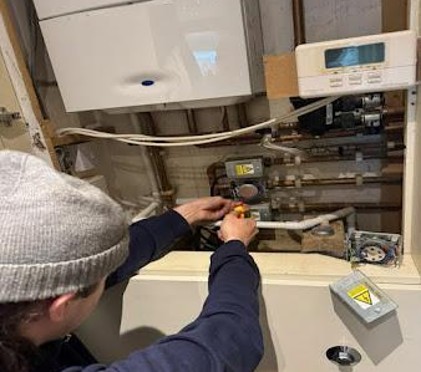
There are a few safe checks homeowners can carry out before arranging a repair.
Check the Boiler Pressure
Look at the boiler’s pressure gauge and, where fitted, confirm the needle sits in the green zone.
For many systems, the recommended cold pressure is around 1 to 1.5 bar, although this varies between manufacturers.
If it’s significantly lower, consult your boiler manual before topping it up, and repeated movement outside the green zone is one of the warning signs to call an engineer.
Bleed Your Radiators
If some radiators have cold spots at the top, trapped air may be the cause.
Bleeding the radiators can often improve circulation and reduce knocking noises.
Listen Carefully
Try to identify: listening for common boiler noises can help narrow down the fault.
- Does the noise happen immediately?
- Does it happen only during heating?
- Is it coming from the boiler or pipework?
- Does it occur with hot water only?
A whistling sound can point to limescale or a blockage, gurgling noises often suggest trapped air, and a vibrating noise may indicate a loose part or pump issue. These observations help your engineer diagnose the fault much faster.
Check for Error Codes
Most modern boilers display fault codes when a problem develops.
Write down any code, along with any strange noises or unusual noises coming from the boiler, before contacting an engineer, and if the code persists, treat it as a warning sign to call an engineer.
What You Should Never Attempt Yourself
Although there are simple checks homeowners can perform, certain repairs should always be left to professionals, and you should never remove or open the boiler casing yourself because of the gas and electrical components inside.
Never attempt to:
- Remove boiler covers
- Repair gas components
- Replace internal parts
- Adjust combustion settings
- Repair the heat exchanger
- Work on sealed system components without appropriate knowledge
Gas appliances should only be worked on by appropriately qualified Gas Safe registered engineers.
When Should You Call a Heating Engineer?
We recommend arranging a professional inspection, and call an engineer if simple checks do not stop the noise if:
- The banging continues after bleeding radiators.
- The pressure repeatedly drops.
- The boiler overheats.
- The noise becomes louder.
- you hear a loud bang or repeated banging sound.
- You notice leaks.
- The boiler frequently locks out.
- Hot water or heating becomes unreliable.
- In cold weather, you suspect a frozen condensate pipe or a blocked condensate pipe.
Many issues are considerably cheaper to fix when caught early, and early action can prevent costly repairs and restore efficient operation sooner.
Can Regular Servicing Prevent Boiler Noises?
Absolutely.
Regular servicing helps prevent boiler noise and supports efficient operation.
During an annual boiler service, engineers check combustion and system controls, and we often identify:
- Early limescale build-up
- Pump wear
- Pressure issues
- Faulty expansion vessels
- Air within the system
- sludge buildup
- Safety concerns
Where contamination is found, a professional power flush can remove sludge and limescale and restore proper water flow.
Adding an inhibitor after cleaning helps prevent future corrosion and limescale.
Preventative maintenance usually costs far less than emergency repairs.
How We Diagnose Noisy Boilers
When we attend a noisy boiler call-out, we don’t simply listen to the sound and guess; we carry out a proper diagnosis.
Instead, we systematically inspect:
- Boiler operating pressure
- Heat exchanger condition
- Circulation pump
- Expansion vessel
- Pipework
- Radiators
- System flow temperatures
- Fault codes
- Safety devices
- boiler flue
This thorough approach allows us to identify the true cause rather than treating only the symptom, helping us spot restricted flow in the boiler system and whether water can circulate properly.
Frequently Asked Questions
Why does my boiler bang when it switches on?
This often points to kettling, trapped air or expanding pipework, but if the boiler is making a loud bang at start-up, delayed ignition is another possible cause because gas can build up before it ignites and needs a gas safe engineer. A professional inspection can identify the exact cause.
Why is my boiler banging but still working?
Many boilers continue operating despite developing faults, and the boiler system may still run for a while even when warning signs are present. However, continued use could turn a minor fault into costly repairs.
Will a boiler explode if it’s making banging noises?
Modern boilers include multiple built-in safety features designed to prevent dangerous pressure build-up. Nevertheless, loud banging should always be investigated promptly.
Can low pressure cause banging?
Yes. Low pressure can affect water circulation, although other faults are frequently involved as well.
Should I turn the boiler off?
If you notice warning signs such as overheating, leaks, or a loud bang, switching the appliance off is generally the safest option; if the noise persists or the boiler is making strange noises, arrange an inspection by a Gas Safe engineer.
Why Choose WPJ Heating?
At WPJ Heating, we’ve diagnosed and repaired countless noisy boilers over the years.
Our experienced engineers understand that unusual boiler noises can be worrying, particularly during colder months when reliable heating is essential.
Whether the issue is trapped air, kettling, pump failure or something more complex, we’ll accurately diagnose the fault and recommend the most appropriate solution, helping you restore efficient, reliable heating as quickly as possible.
If your boiler has started making banging, knocking or rumbling noises, don’t wait until it develops into a complete breakdown. Getting the problem investigated early could save you both stress and unnecessary repair costs.
Conclusion
A boiler making a banging noise is rarely something to ignore, and common boiler noises such as banging, gurgling, or whistling can point to different faults. While some causes, such as trapped air, can be relatively simple to resolve, others like kettling, circulation problems or failing components need expert help to protect safe and efficient operation.
Understanding the possible causes helps you recognise when a minor issue could become a major repair if left untreated.
If you’re unsure what’s causing the noise, or your boiler continues making unusual sounds after basic checks, the safest approach is to have a Gas Safe engineer inspect it for proper diagnosis.
At WPJ Heating, we’re always happy to help homeowners keep their heating systems running safely, efficiently and reliably throughout the year contact us today.