
Why Is My Boiler Leaking Water? Common Causes Explained
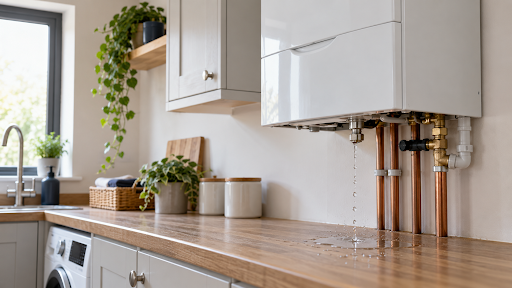
Quick Answer: If your boiler is leaking water, the cause could be a loose pipe fitting, damaged seal, high boiler pressure, faulty pressure relief valve, expansion vessel problem or leaking heat exchanger. Even a small leak should not be ignored, as it can cause water damage or affect boiler pressure. If the source is not clearly external, contact a qualified Gas Safe registered heating engineer.
If your boiler is leaking water, the cause could be anything from a loose pipe fitting or failed seal to a faulty pressure relief valve, expansion vessel or heat exchanger. Even a small drip should not be ignored. Turn the heating off if it is safe to do so, avoid removing the boiler casing and arrange an inspection if you cannot identify a simple external source.
A leaking boiler can also explain other symptoms, such as low boiler pressure, a pressure gauge that keeps dropping or water pooling underneath the appliance.
At WPJ Heating, we diagnose and repair boiler and central heating problems across South and West London. Understanding where the water is coming from and when the leak appears can give a heating engineer useful clues about the underlying fault.
What Should I Do If My Boiler Is Leaking Water?
If you notice water leaking from your boiler, switch the heating off if it is safe to do so and keep water away from electrical components. Do not remove the boiler casing or attempt an internal repair yourself. A persistent leak, rapidly escaping water or unexplained pressure loss should be investigated by a qualified heating engineer.
A few observations can help before you book a repair:
- Check where the water appears to be coming from without removing the boiler casing.
- Look at the pressure gauge and note whether the pressure is unusually high or low.
- Check visible pipework, radiator valves and fittings for signs of water.
- Note whether the leak happens constantly, only when the heating runs or after the boiler switches off.
- Put a container beneath a small drip, where practical, to limit water damage while waiting for an engineer.
If water is reaching electrical components, sockets or wiring, do not touch the affected equipment. Isolate the electricity supply only if you can do so safely.
Never open the boiler casing to investigate an internal leak. Work affecting the gas components or combustion side of a gas appliance must be carried out by someone appropriately Gas Safe registered.
Why Is My Boiler Leaking Water?
A boiler can leak because water is escaping from the boiler itself, its valves or the surrounding heating system. Common causes include excessive boiler pressure, a faulty pressure relief valve, expansion vessel problems, damaged seals, corroded pipework, loose fittings and a leaking heat exchanger.
The location and timing of the leak often help narrow down the cause.
High Boiler Pressure
Water expands as it heats. A sealed heating system therefore needs a way to accommodate that expansion.
If the boiler pressure rises too far into the high or red zone when the heating runs, the system may discharge water through its pressure relief valve. Overfilling the system through the filling loop can also create too much pressure.
The correct pressure varies between boilers, so check the manufacturer’s instructions rather than relying on one figure for every appliance.
If you reduce or correct the pressure and it repeatedly becomes too high again, the underlying fault needs diagnosing rather than repeatedly adjusting the filling loop.
Faulty Pressure Relief Valve
The pressure relief valve (PRV) is a safety component designed to release water when system pressure becomes excessive.
Once a PRV has operated, debris or wear can sometimes prevent it from sealing correctly again. Water may then continue to pass through the discharge pipe even after the pressure has returned to normal.
A leaking safety valve can therefore be both a symptom of another pressure problem and a fault in its own right.
Expansion Vessel Problems
The boiler expansion vessel provides space for system water to expand as it heats.
If the vessel loses its air charge or its internal diaphragm fails, it may no longer absorb this expansion effectively. The boiler pressure can then rise sharply as the heating warms up and fall again as the system cools.
This extra pressure can cause the pressure relief valve to discharge water.
An engineer can test the expansion vessel and determine whether it can be recharged or needs replacing.
Damaged Seals and Pipe Fittings
Boilers contain numerous connections and seals. Natural wear, temperature changes and corrosion can eventually allow small amounts of water to escape.
A failed seal may initially produce nothing more than a small drip, but leaks can worsen and affect nearby components.
Visible external fittings may sometimes make the source obvious. Internal pipework and seals require professional investigation.
Corroded Pipework
Older heating systems can develop corrosion in pipes, fittings and components.
A small area of corrosion can eventually create a pinhole leak, while more extensive deterioration may indicate that replacing a larger section of pipework is more cost-effective than carrying out repeated local repairs.
The important step is identifying whether the corrosion is isolated or part of a wider central heating system problem.
Leaking Heat Exchanger
The heat exchanger transfers heat from the boiler’s combustion process to the water circulating through the heating system.
A damaged or corroded heat exchanger can result in an internal boiler water leak. Because the heat exchanger sits inside the appliance, diagnosing this problem is not a DIY task.
Depending on the boiler’s age, condition and the cost and availability of replacement parts, an engineer may discuss repairing the heat exchanger or replacing the boiler.
Why Is My Boiler Leaking Water From the Bottom?
Water underneath a boiler does not necessarily mean the bottom of the boiler itself has failed. Water can travel along internal components or pipework before dripping from the lowest point, making the visible location different from the actual source.
Possible causes include:
- a leaking internal seal;
- loose or damaged pipe fittings;
- a leaking pump or valve;
- corrosion;
- an expansion vessel or pressure relief problem; or
- a leaking heat exchanger.
Also inspect the visible pipework below the boiler. A boiler pipe leaking near the appliance can easily create the impression that water is coming directly from the boiler casing.
Avoid removing the casing to trace the leak further.
Why Is My Boiler Leaking Water From a Pipe?
Water leaking from a pipe near the boiler may be caused by a loose fitting, damaged joint, corrosion, condensate problem or water being deliberately discharged by a safety device.
The type of pipe matters.
For example, a pressure relief pipe leaking can indicate excessive system pressure or a faulty PRV. A condensate pipe leaking has a different purpose and may be caused by a damaged, disconnected or blocked section of condensate pipework.
A heating engineer can identify the pipe and establish whether the water represents a component fault, a drainage issue or a heating-system leak.
Why Is My Boiler Leaking Water When the Heating Is On?
A boiler that leaks mainly when the heating is on can indicate a pressure or expansion-related fault. As the system heats, the water expands. If the expansion vessel cannot accommodate the additional volume, system pressure can rise and the pressure relief valve may discharge water.
Temperature can also make an existing weak joint or seal more noticeable as metal components expand during a heating cycle.
Watch the pressure gauge from a safe distance when the boiler is cold and again while the heating is operating. A substantial change can provide useful diagnostic information for your engineer.
Do not repeatedly release or add water simply to compensate for the symptom without finding out why the pressure is changing.
Why Is My Boiler Leaking Water When Switched Off?
A boiler can continue leaking when switched off because parts of the heating system remain filled with water and under pressure. A damaged seal, corroded fitting or leaking pipe can therefore continue dripping even when the burner and heating are not operating.
The timing still provides useful clues.
A leak that becomes worse while heating and slows as the boiler cools can suggest a pressure or expansion issue. A steady leak regardless of boiler operation may point towards a persistent problem with pipework, seals or another water-containing component.
Professional diagnosis is the safest way to identify the source.
Why Is My Boiler Losing Pressure as Well as Leaking?
A boiler leak and falling pressure are often connected because water escaping from a sealed heating system reduces the volume of water available to maintain system pressure. The leak may be inside the boiler or elsewhere in the central heating system.
Check accessible radiator valves and visible heating pipes for dampness as well as looking around the boiler.
WPJ Heating’s existing guide to repressurising a boiler explains how filling loops and boiler pressure work in more detail.
Repeatedly topping up the boiler is not a long-term solution if pressure keeps falling. If the system loses pressure again soon afterwards, the underlying leak or faulty component needs to be found and repaired.
Is a Leaking Boiler Dangerous?
A leaking boiler should be treated seriously, particularly if water is reaching electrical components or the leak requires access inside a gas appliance. A water leak does not automatically mean there is a gas leak, but the boiler should not be dismantled or repaired by an unqualified person.
Water can damage flooring, cupboards, ceilings and electrical components if a leak is left untreated.
There is also an important distinction between plumbing work and regulated gas work. If work involves gas-carrying components or the combustion side of a gas boiler, it must be carried out by someone appropriately registered and competent for that work.
If you smell gas, suspect carbon monoxide or believe the appliance is unsafe, follow the relevant gas-emergency procedure rather than attempting to diagnose the boiler yourself.
Can a Leaking Boiler Be Repaired?
Many leaking boilers can be repaired once the exact source has been identified. The appropriate repair depends on whether the fault involves a seal, valve, pipe fitting, expansion vessel, pump, pressure relief valve, heat exchanger or another component.
A professional diagnosis normally considers:
- where the water is originating;
- whether the boiler pressure is stable;
- whether the fault changes when the heating runs;
- the condition of surrounding pipework;
- which component has failed; and
- whether another fault caused that component to fail.
Finding the root cause matters. Replacing a pressure relief valve, for example, may not solve the problem if a failed expansion vessel is repeatedly creating excessive pressure.
Should I Repair or Replace a Leaking Boiler?
A water leak does not automatically mean you need a new boiler. Repair may be the most cost-effective solution when the boiler is otherwise in good condition and the fault involves a replaceable component such as a valve, seal or expansion vessel.
Replacement may deserve consideration if the boiler is older, several major components are deteriorating, parts are difficult to obtain or the repair involves an expensive major component such as a heat exchanger.
There is no single answer based on age alone.
A heating engineer should identify the fault first and explain the available options so you can compare the repair cost with the condition and likely remaining service life of the appliance.
How Does a Heating Engineer Find a Boiler Water Leak?
A heating engineer diagnoses a boiler leak by examining the appliance and heating system rather than assuming that the point where water appears is the source. The investigation may include checking boiler pressure, visible fittings, valves, seals, discharge pipework and relevant internal components.
The symptoms you have observed can make diagnosis easier.
Tell the engineer:
- where you first noticed water;
- whether the pressure gauge is dropping or rising;
- whether you have recently repressurised the system;
- whether the leak changes when the heating is on;
- how quickly water is escaping; and
- whether any radiator valves or heating pipes are also wet.
For a gas boiler, choose an engineer who is Gas Safe registered and qualified for the work required.
Can Regular Boiler Servicing Help Prevent Leaks?
Regular boiler servicing can identify deterioration and pressure problems before some faults develop into larger failures, although servicing cannot guarantee that a future leak will never occur.
WPJ Heating’s boiler service includes checks of system pressure and safety devices as well as relevant boiler and heating-system checks.
Homeowners can also keep an eye on their pressure gauge between services. A boiler that suddenly needs frequent repressurising, repeatedly develops high pressure or starts dripping water deserves investigation rather than repeated resetting.
Need Help With a Leaking Boiler in London?
If your boiler is leaking water, losing pressure or leaving water underneath the appliance, finding the source early can help prevent further water damage and identify whether the problem is confined to the boiler or affects the wider heating system.
WPJ Heating provides boiler repair in London and covers South and West London, including Battersea, Wandsworth, Chelsea, Fulham, Putney, Barnes, Clapham, Richmond, Wimbledon, Hammersmith and Kensington.
Our Gas Safe registered engineers can diagnose boiler and heating-system faults and explain the repair options before the problem develops further.
If you have noticed a boiler water leak, book an engineer with WPJ Heating to have the appliance and heating system professionally assessed.