

No Power to Your Boiler? Common Causes and What to Check

Quick Answer: If there is no power to your boiler, first check that your home has electricity, the boiler’s power switch or fused spur is on, and no circuit breaker or RCD has tripped. A blank display or no lights can indicate a power-supply issue, blown fuse or internal electrical fault. If power is reaching the boiler but it remains completely dead, contact a qualified heating engineer for diagnosis.
If there is no power to your boiler, the first things to check are the boiler’s power switch or fused spur, your fuse box or consumer unit, and whether other electrical appliances are working. A blank boiler display can be caused by a simple external power issue, but a blown fuse, repeatedly tripping RCD or internal boiler electrical fault needs proper investigation.
At WPJ Heating, we repair boilers across South and West London, and a boiler that appears completely dead does not necessarily mean the appliance needs replacing. Finding out where the power has been interrupted is the important first step.
This guide explains what you can safely check yourself and when to call a professional.
Why Does My Boiler Have No Power?
A boiler can lose power because electricity is not reaching it, its controls are not operating correctly, or an electrical component inside the boiler has failed. A power cut, switched-off fused spur, blown fuse or tripped circuit breaker can all stop the electricity supply before it reaches the appliance.
If the external boiler power supply is working correctly but the boiler display remains blank, the problem may be inside the appliance.
Common causes include:
- a power cut or wider electricity supply problem
- the boiler switch or isolation switch being turned off
- a tripped circuit breaker or RCD
- a blown fuse in the boiler’s fused spur
- a faulty fused spur or wiring problem
- a thermostat, timer or programmer issue
- a PCB or other internal electrical fault.
The symptoms matter. No lights on a boiler and a completely blank screen point more strongly towards a power issue than a boiler that has an illuminated display but will not fire.
What Can I Safely Check If My Boiler Is Completely Dead?
If your boiler is completely dead, start with simple checks that do not require removing its casing or interfering with wiring or gas components. Check whether your home has electricity, whether the boiler’s external power switch is on and whether anything has tripped at the consumer unit.
Work through these checks in order.
1. Check whether the property has electricity
Try a light or another electrical appliance.
If other appliances have also lost power, the problem is unlikely to be limited to your boiler. There may have been a local power cut, an issue with a prepayment electric meter or a circuit within the property may have lost power.
If everything else works normally, continue to the boiler’s dedicated supply.
2. Check the boiler switch or fused spur
Gas boilers still require electricity to operate their controls, pump, fan, ignition system and other components.
Most boilers have an electrical isolation point, commonly a switched fused connection unit or fused spur, nearby, and it often has its own switch. The boiler’s fused spur is typically a small wall switch with a red window and an internal fuse, as large appliances often have their own internal fuse to protect the appliance separately from the main circuit. Make sure it has not accidentally been switched off, and if a qualified professional finds a blown fuse there, they may replace it with a standard 3-amp or 5-amp fuse if that matches the manufacturer guidance.
Do not dismantle the fused spur or work on electrical wiring yourself.
3. Look at the consumer unit or fuse box
Check whether a circuit breaker or RCD has tripped at the consumer unit, fuse box, or fuse board. The residual current device is a safety feature on the fuse board.
A single trip may occur following an electrical disturbance or power interruption. However, if the breaker or RCD trips again after being reset, stop resetting it. Repeated tripping can indicate an electrical fault with an appliance or the circuit and needs professional investigation. An rcd tripped event can also be caused by a fault near an electric component on the boiler circuit.
4. Check the boiler display
A boiler screen that is completely blank provides a useful diagnostic clue.
If there are no lights or display despite the external electrical supply apparently being available, an engineer may need to establish whether electricity is reaching the boiler and then test its internal components.
Never remove a functional boiler casing to perform these checks yourself.
Could a Blown Boiler Fuse Cause a Blank Display?
Yes. A blown fuse can interrupt the electricity supply and leave the boiler with no lights or working display. However, the important question is not simply whether the fuse has blown, but why. A fuse is a safety device designed to disconnect the supply when an electrical fault or excessive current occurs.
Some boiler installations use a fused spur containing a replaceable fuse, and that fuse can blow with age or after a power surge. Boilers can also have internal electrical protection, depending on their design. The engineer should replace the spur fuse correctly and re test the supply rather than guessing.
What fuse does a boiler use?
Do not assume that every boiler uses the same fuse rating. Check the boiler manufacturer’s instructions and the existing installation rather than fitting a different fuse because it happens to fit.
Replacing a fuse with an incorrect rating can compromise the protection intended for the circuit or appliance.
More importantly, if a boiler fuse keeps blowing, repeatedly replacing it is not a repair. A recurring blown fuse can indicate an electrical problem that requires diagnosis.
Why Does My Boiler Keep Tripping the RCD or Circuit Breaker?
A boiler that repeatedly trips an RCD or circuit breaker often points to a fault rather than being the main problem, whether in the appliance, associated heating equipment or electrical circuit. Possible faults can involve wiring or electrical components such as a pump, fan or PCB, but testing is needed to establish the actual cause.
An RCD is a protective device and safety feature designed to disconnect electricity when certain electrical faults are detected.
If your RCD keeps tripping when the boiler operates, do not repeatedly reset it in an attempt to keep the heating running. Have the fault investigated.
A simple electrical test may be needed to identify whether the boiler or the circuit is at fault. The appropriate professional depends on where the fault is found. An electrician may be required for a problem with the fixed electrical installation, while faults involving the boiler itself should be assessed by a suitably qualified heating engineer.
Why Won’t My Boiler Turn On After a Power Cut?
A boiler that will not turn on after a power cut may need its power supply, clock or controls checked and, depending on the model, may require a reset. Power interruptions can affect boiler settings and programmers, so always consult the manufacturer’s instructions before attempting a reset.
First check that electricity has returned throughout the property and that the boiler switch and consumer unit are in their normal positions.
Then look at the boiler display, where the reset button is typically located on the display board, although its position can vary by model.
If your manufacturer instructs users to reset the boiler after an interruption, follow the exact procedure in your boiler manual. If the instructions allow it, reset your boiler by pressing and holding the reset button for five seconds. Try one reset only.
Avoid repeatedly pressing the reset button. A boiler that will not recover after the manufacturer’s recommended reset needs further investigation.
Can a Thermostat or Timer Make It Look Like the Boiler Isn’t Working?
Yes, but a faulty thermostat, timer or programmer usually produces different symptoms from a total loss of electrical power. If the boiler display is illuminated but the heating will not start, check whether the controls are requesting heat before assuming the boiler itself has lost power.
Check that:
- the thermostat is switched on and set above the current room temperature
- a battery-powered thermostat has working batteries
- the timer or programmer shows the correct time
- the heating schedule has not been changed
- a smart thermostat is connected and operating normally.
Heating controls tell the system when heat is required. If that request never reaches the boiler, the boiler may remain idle even though electricity is available.
This distinction is useful: a blank display suggests investigating the power supply, whereas a working display with no heating can point towards controls, a lockout or another boiler fault.
What If the Boiler Has Power but Still Won’t Fire Up?
If the boiler display works but the boiler will not fire, the issue may not be electrical power at all. Low water pressure, interrupted gas supply, ignition failure, a frozen condensate pipe or another safety lockout can prevent a powered boiler from providing heating or hot water.
Check the display for a fault code or error code and consult the manufacturer’s instructions.
You may also be able to check:
- whether the pressure gauge is within the range specified for your model
- whether the thermostat is calling for heat
- whether your gas supply is available
- whether other gas appliances work, where applicable.
Checking whether gas appliances work can help show whether the fault is with the boiler or the supply itself. If you smell gas, turn off the gas supply and contact emergency services.
During cold weather, a frozen external condensate pipe can also cause some boilers to lock out. This is different from the boiler genuinely losing electrical power because the display will generally still be able to communicate a fault. This is a safety shutdown, and the pipe can often be thawed carefully with a hot water bottle.
If low pressure appears to be the issue, see our guide to repressurising a boiler for more information. Flame failure is another common lockout cause and, if it continues after a single reset, it needs professional diagnosis.
What Internal Faults, Such as a Faulty Printed Circuit Board, Can Leave a Boiler With No Power?
Once an engineer has confirmed that the correct electrical supply reaches the boiler, a blank display may indicate an internal electrical problem. Potential causes include a pcb fault, damaged internal wiring or another failed electrical component, and a lockout can also point to this kind of internal issue, but the boiler needs testing before any component can be blamed.
The printed circuit board (PCB) plays a central role in controlling and coordinating boiler functions. A problem affecting it can disrupt the whole system because it acts as the boiler’s control centre. Pumps, fans, sensors, ignition components and controls also interact with the boiler’s electronics.
This is why replacing parts based only on a blank display is poor diagnosis. The engineer first needs to establish where electrical power is present and where it is being lost.
WPJ Heating’s boiler repair engineers use diagnostic equipment when investigating boiler electrical and circuitry problems.
Do not open the boiler casing to test internal components yourself. Gas Safe guidance explains that where a casing forms a functional part of the appliance, it should not be removed by an unregistered consumer.
Should I Call a Heating Engineer or an Electrician?
Call a Gas Safe Engineer when the problem appears to be within a gas boiler or its components. A registered electrician may be more appropriate when evidence points to the property’s fixed wiring, consumer unit or electrical circuit rather than the boiler itself.
There can be overlap.
For example, if electricity is available elsewhere but the boiler remains dead, a heating engineer can diagnose boiler-related faults. If an RCD repeatedly trips because of a problem with the property’s wiring or consumer unit, an electrician may be required.
For work involving a gas boiler, always make sure the engineer is appropriately Gas Safe registered for the work being carried out by a Gas Safe registered engineer.
How Much Does It Cost to Repair a Boiler With No Power?
The cost of repairing a boiler with no power depends on the cause, the time required for diagnosis, the boiler make and model, and whether components need replacing. A power-supply or control problem can require very different work from replacing a failed PCB, pump, fan or other internal component.
Other factors affecting repair costs can include:
- availability and price of replacement parts
- accessibility of the boiler and electrical supply
- whether additional electrical diagnosis is required
- the age and condition of the appliance
- whether more than one fault is present
- whether repairing an ageing boiler remains economical.
It is therefore better to diagnose the cause before estimating the repair than to assume that every blank boiler display requires the same fix.
If an older boiler has suffered a major component failure, an engineer can also explain the repair and replacement options so you can compare them before deciding what to do. If repair costs are high on an older appliance, replacing it with a new boiler may be the better option.
Can Boiler Servicing Prevent Electrical Problems?
Regular boiler servicing cannot prevent every unexpected electrical failure, but it allows the appliance to be inspected and tested periodically and can identify developing problems before some become breakdowns. Servicing also provides an opportunity to check the boiler’s general operation and safety.
WPJ Heating provides boiler servicing in London as well as boiler repairs across South and West London.
If your boiler keeps losing power, switching itself off or needing repeated resets, do not wait for the problem to become permanent. Repeated faults are information: they indicate that the underlying cause needs to be identified.
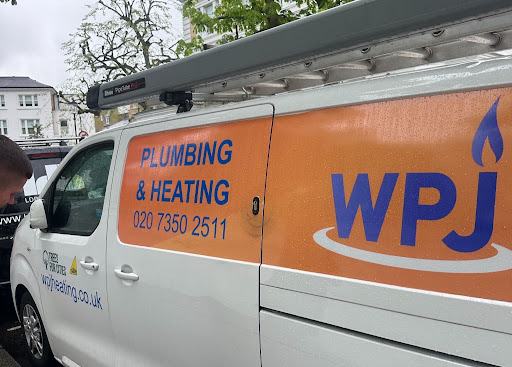
No Power to Your Boiler in London? WPJ Heating Can Help
If you have checked the external power supply and controls but your boiler is still completely dead, professional diagnosis is the next step. WPJ Heating provides boiler repair services across South and West London, with Gas Safe registered engineers able to investigate boiler faults and explain the appropriate repair options.
Whether your boiler has no power, the display is blank, the electrics keep tripping or the boiler suddenly stopped working, diagnosing the cause is safer and more useful than repeatedly resetting switches or replacing fuses.
Contact WPJ Heating / book an engineer to arrange a boiler repair in London.
Safety disclaimer: This guide provides general information for basic external checks only. Do not remove a functional boiler casing, interfere with gas components or undertake electrical repairs unless you are appropriately qualified and competent. Always follow the manufacturer’s instructions for your specific boiler. If you smell gas or suspect a gas emergency, follow the official emergency guidance rather than attempting to diagnose the boiler yourself.