

Water Dripping From the Boiler Overflow/Discharge Pipe: What Does It Mean?
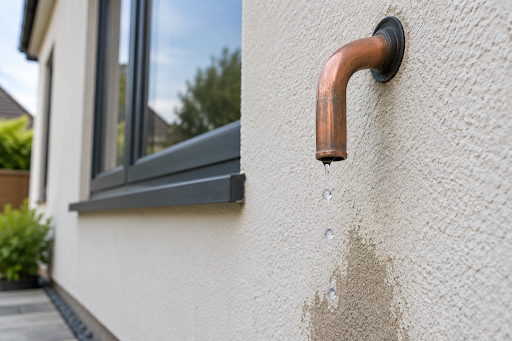
Quick Answer: Water dripping from the boiler overflow or discharge pipe usually means the heating system is releasing water because the pressure is too high or a component is faulty. Common causes include a faulty pressure relief valve (PRV), a problem with the expansion vessel or a filling loop that is allowing too much water into the system. A persistent drip should be checked by a Gas Safe registered engineer.
If you have water dripping from the boiler discharge pipe outside your home, it can indicate that the boiler has released water because the heating system pressure became too high. Common causes include a problem with the expansion vessel, a faulty pressure relief valve (PRV) or a filling loop that is allowing additional water into the system.
A small drip may not look serious, particularly when the water is safely discharging outdoors. However, a boiler discharge pipe should not normally drip continuously. If the leak persists or your boiler pressure keeps rising or falling, the underlying cause needs investigating rather than repeatedly repressurising the boiler.
Here is what homeowners and landlords should know about a boiler overflow or discharge pipe dripping and when to arrange a professional boiler repair.
Why Is Water Dripping From My Boiler Discharge Pipe?
Water dripping from a boiler discharge pipe usually means that water has been released from the sealed heating system. One possible reason is that the pressure relief valve has opened because the system pressure became too high. A faulty PRV can also continue passing water even after the pressure has returned to normal.
The pressure relief valve is a safety component. If internal pressure rises beyond the permitted level for the appliance, the valve can open to relieve excess pressure.
The released water is directed through the pressure relief discharge pipe, which normally terminates outside the property. This is why a problem inside the heating system can first become noticeable as a dripping copper pipe on an outside wall.
The important question is therefore not simply how to stop the drip. A heating engineer needs to establish why water is being discharged in the first place.
Is It an Overflow Pipe or a Pressure Relief Discharge Pipe?
People often describe any external pipe that is releasing water as a boiler overflow pipe, but the pipe connected to a sealed boiler heating circuit may actually be the pressure relief discharge pipe.
The distinction matters because different pipes serve different purposes.
A pressure relief discharge pipe provides a safe route for water released by the boiler’s pressure relief valve. Other overflow pipes around a property may relate to water tanks, toilet cisterns or other plumbing equipment.
There may also be a condensate pipe connected to a modern condensing boiler. Condensate discharge is part of normal boiler operation and should not automatically be confused with a boiler water leak.
If you are unsure which pipe is dripping, avoid dismantling the boiler casing or trying to trace internal boiler components yourself. A heating engineer can identify the pipe and determine its source.
What Causes a Boiler Discharge Pipe to Drip?
Several faults can cause water to drip from a boiler discharge pipe, but problems involving system pressure are among the most important to investigate.
High Boiler Pressure
High boiler pressure can cause the pressure relief valve to operate and release water from the heating system.
Check the pressure gauge when the system is cold and again when the heating has been operating. The correct pressure range depends on the boiler, so follow the manufacturer’s instructions rather than assuming one pressure is correct for every appliance.
WPJ’s guide to repressurising boilers notes that, for many boilers, approximately 1–1.5 bar when cold is considered an optimum range, while advising homeowners to check the specific boiler manual.
If the pressure repeatedly climbs unusually high when the heating is switched on, there may be an underlying fault that requires investigation.
A Faulty Expansion Vessel
The expansion vessel accommodates changes in water volume as the heating system warms up.
As heating water becomes hotter and expands, the expansion vessel helps prevent excessive increases in system pressure. If the vessel loses its air charge or develops a fault, it may no longer accommodate that expansion correctly.
A common pattern is pressure that appears relatively normal when the system is cold but rises significantly as the heating warms up. The pressure relief valve may then open and discharge water.
Once the system cools, the pressure can subsequently become too low because some water has escaped. The homeowner then repressurises the boiler, only for the cycle to happen again.
That is why repeatedly topping up a boiler without finding the root cause is not a long-term fix.
A Pressure Relief Valve That Is Leaking
A faulty pressure relief valve can itself cause a boiler discharge pipe to leak.
A PRV may initially open because of excessive system pressure. In some cases, it may subsequently fail to reseal correctly and continue allowing a small amount of water through.
This can create a persistent drip outside even after the pressure gauge appears to have returned to a more normal level.
Replacing or investigating a boiler pressure relief valve involves boiler components and should be left to a suitably qualified heating engineer.
A Filling Loop That Is Letting Water Into the System
The filling loop allows water from the mains supply to enter a sealed central heating system when it needs repressurising.
If a filling loop valve has not been completely closed, or a valve develops a fault, additional water may continue entering the heating circuit. System pressure can then increase until the pressure relief valve operates.
If you recently repressurised your boiler and the pressure has continued to climb afterwards, tell your heating engineer. That information can help with diagnosis.
Why Is My Boiler Losing Pressure After the Discharge Pipe Drips?
A boiler can lose pressure after its discharge pipe has been dripping because water has physically left the sealed heating system. Once the system cools, the pressure gauge may therefore show low boiler pressure. This can create a repeating pattern of repressurising, excessive pressure, discharge and subsequent pressure loss.
This pattern is particularly important because homeowners can understandably assume that low pressure means the boiler simply needs more water.
Repeatedly adding water treats the symptom rather than identifying why the pressure was lost.
WPJ’s existing guidance identifies small system leaks, expansion-vessel problems, faulty radiator valves and a broken pressure relief valve as potential causes of repeated pressure loss.
If your boiler keeps losing pressure, record what the gauge shows when the heating is cold and how it changes when the heating is operating. This information can be useful when booking a repair.
Is a Boiler Discharge Pipe Dripping Dangerous?
A dripping boiler discharge pipe does not automatically mean that there is an immediate emergency, but it should not be ignored. Continuous discharge can indicate a pressure-control or boiler component fault, and the underlying problem should be investigated by a qualified professional.
Do not block, cap or otherwise obstruct a pressure relief discharge pipe to stop the water. It provides a discharge route for a safety device.
You should also avoid removing the boiler casing or attempting repairs to internal components yourself.
Arrange professional assistance promptly if:
- water is leaking from the boiler itself rather than only an external pipe;
- the amount of water is increasing;
- boiler pressure is repeatedly rising excessively;
- pressure continually drops after repressurising;
- water is causing damage to the property;
- the boiler is repeatedly shutting down or displaying a fault;
- you suspect a gas leak or another gas-related problem.
If you smell gas or suspect a gas emergency, follow the current emergency guidance from the Gas Safe Register/National Gas Emergency Service rather than attempting to diagnose the boiler yourself.
What Can I Safely Check Before Calling a Heating Engineer?
You can check the boiler pressure gauge, note whether the pressure changes significantly as the heating warms up, and look for visible water around radiators and accessible pipe connections. These observations may help an engineer diagnose the fault, but you should not remove the boiler casing or attempt internal repairs.
Start by noting the pressure when the boiler is cold.
Next, observe whether it increases substantially while the central heating is running. You can also check whether the external pipe drips continuously or mainly when the heating is hot.
Look around accessible radiators, valves and visible heating pipework for signs of a slow leak. Damp patches or recurring pressure loss elsewhere in the system may be relevant.
It is also worth noting whether the problem began shortly after the boiler was repressurised.
Take photographs of the pressure gauge and dripping pipe if practical. These can help explain the symptoms when you contact an engineer.
How Does a Heating Engineer Diagnose a Dripping Boiler Discharge Pipe?
A heating engineer will normally investigate the pressure behaviour and determine why the pressure relief valve is passing water rather than simply treating the outdoor drip. The checks required depend on the boiler and symptoms, but may include the PRV, expansion vessel, filling arrangement and wider heating system.
For example, pressure that rises sharply as the heating warms can point the investigation towards expansion-related problems.
Pressure that rises even when the heating is cold may require different checks.
If a PRV has been operating, the engineer can establish whether another fault caused it to open and whether the valve itself is now passing water.
The aim is to find the root cause, because replacing one component without identifying why it failed or operated may allow the problem to return.
Can a Dripping Boiler Be Repaired?
In many cases, yes. A boiler dripping water from its discharge pipe does not automatically mean the entire boiler needs replacing.
The appropriate repair depends on the diagnosis. It might involve correcting a pressure problem, addressing the filling arrangement, servicing or repressurising an expansion vessel where appropriate, replacing a faulty component, or repairing another leak within the central heating system.
Age, boiler condition, parts availability and the extent of the fault also influence whether repair remains cost-effective.
A heating engineer should diagnose the fault before recommending a major repair or full replacement.
How Much Does It Cost to Fix a Boiler Discharge Pipe Leak?
There is no single reliable price for fixing a boiler discharge pipe leaking, because the visible drip is a symptom rather than a diagnosis.
The eventual cost will depend on the root cause, the boiler make and model, replacement parts required, accessibility, labour and whether another central heating fault is contributing to the problem.
For example, correcting a filling-loop issue can involve different work from diagnosing an expansion-vessel fault or replacing a pressure relief valve.
For that reason, obtain a diagnosis and quotation based on your particular boiler rather than assuming that every dripping discharge pipe requires the same repair.
Can Regular Boiler Servicing Help Prevent Pressure Problems?
Regular servicing gives an engineer an opportunity to check the condition and operation of the boiler and identify developing problems.
WPJ Heating‘s published boiler service procedure includes checking system pressure where applicable, testing safety devices and checking the appliance’s operation.
Servicing cannot guarantee that a component will never fail between visits, but an annual boiler service provides a useful opportunity for routine checks and maintenance.
If you already have recurring pressure problems, however, do not simply wait until the next annual service. A persistent leak or repeated pressure change should be investigated as a fault.
When Should I Call a Gas Safe Engineer About a Boiler Leak?
Contact a suitably qualified engineer when the boiler discharge pipe keeps dripping, the boiler repeatedly gains or loses pressure, you have to repressurise it frequently, or there is water coming from the appliance itself.
Gas boiler work should be carried out by someone appropriately registered and qualified for the work involved.
WPJ Heating provides boiler repair in London, and its engineers are Gas Safe registered. WPJ also states that it is registered with the Chartered Institute of Plumbing and Heating Engineers (CIPHE).
The company covers South and West London, including Battersea, Wandsworth, Chelsea, Fulham, Putney, Barnes, Richmond, Wimbledon, Clapham and Hammersmith.
If your boiler is dripping outside, tell the engineer where the water is appearing, whether it is continuous and what happens to the pressure gauge when the heating is switched on. Those details can make the initial diagnosis more useful.

Water Dripping From Your Boiler? Find the Cause Rather Than Repeatedly Repressurising It
A small drip from a boiler discharge pipe can provide an important clue about what is happening inside the heating system.
High boiler pressure can cause the pressure relief valve to open. A faulty expansion vessel can contribute to abnormal pressure changes. A PRV can continue leaking after operating, while problems with the filling loop can introduce additional water and raise system pressure.
The result can be a frustrating cycle in which the boiler discharges water, loses pressure and then needs repressurising again.
If that cycle sounds familiar, arrange a professional diagnosis rather than continuing to top up the system. WPJ Heating provides boiler repairs across South and West London and can investigate pressure problems, leaks and related central heating faults.