

Types of Boiler Thermostats: Which Is Best for Your Home in London?
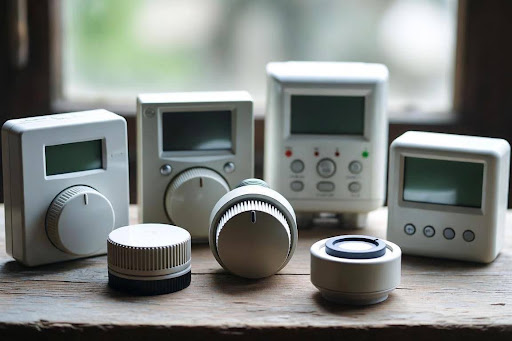
Quick Answer: There are five main types of boiler thermostats: wired room thermostats, digital thermostats, programmable thermostats, wireless thermostats and smart thermostats. The best option for your home depends on your boiler, central heating system and how much control you want. Programmable thermostats suit regular routines, while smart thermostats offer more advanced features such as remote control, scheduling and, with compatible systems, room-by-room heating control.
Choosing between the different types of boiler thermostats can make your heating easier to control and help you avoid using energy when you do not need it. From a basic room thermostat to programmable, wireless and smart heating controls, the best option depends on your boiler, central heating system, property and daily routine.
For London homeowners, there is another consideration: properties vary enormously. A compact flat, Victorian terrace and large multi-storey home can have very different heating requirements. The right thermostat for a boiler therefore needs to do more than offer attractive features; it needs to work properly with the heating system it controls.
This guide explains the main options and what to consider before upgrading your heating controls.
What Does a Boiler Thermostat Actually Control?
A boiler thermostat or heating control system tells your central heating when heat is required, but different controls perform different jobs. A room thermostat responds to the temperature inside your home, while a programmer determines when heating operates. The boiler itself can also have a temperature control that determines how hot the water supplied to the radiators becomes.
This distinction is useful because the term “boiler thermostat” is often used to describe several different controls.
A room thermostat contains a temperature sensor. When the room temperature drops below your desired temperature, the control calls for heat. Once the set temperature is reached, it stops calling for heat.
A programmer or timer controls when the heating operates. With a combi boiler, this may be a single-channel control because domestic hot water is produced on demand. Systems with a hot water tank can require separate controls for central heating and hot water.
Your boiler temperature control, meanwhile, sets the flow temperature of the water leaving the boiler for the heating system.
These controls work together to keep your home warm without running the boiler unnecessarily.
What Are the Main Types of Boiler Thermostats?
The main types of boiler thermostats for UK homes include traditional room thermostats, digital thermostats, programmable thermostats, wireless thermostats and smart thermostats. They perform the same fundamental task of controlling heating demand, but differ considerably in scheduling, connectivity, zoning and the amount of control they give you.
Traditional wired room thermostats
A wired thermostat is one of the simplest forms of central heating thermostat.
Older models may use a dial to set the desired temperature. When the room becomes colder than that setting, the thermostat tells the heating system to operate. Once the required room temperature has been reached, it stops calling for heat.
The advantages are simplicity and familiarity. If you simply want to set one temperature for the whole house, a conventional room thermostat may be sufficient.
The drawback is limited control. A basic thermostat generally cannot create detailed schedules or let you control different rooms independently.
Digital thermostats
A digital thermostat performs a similar role but displays the set temperature electronically rather than relying on a traditional dial.
The digital display makes it easier to see and adjust the temperature accurately. Some models also include additional controls, although features vary between manufacturers.
A digital thermostat can therefore be a sensible thermostat replacement for homeowners who want straightforward temperature control without moving to a fully connected smart system.
Programmable thermostats
A programmable thermostat combines temperature control and scheduling in one device. Instead of maintaining the same temperature throughout the day, a programmable room thermostat can set different temperatures for different periods.
For example, you could programme the house to be warmer around the time you get up, reduce the set temperature while the property is empty and bring the heating back up before you return.
This can give you more control over heating costs because your boiler does not have to maintain the same temperature when you do not need it.
Programmable thermostats work particularly well for households with reasonably predictable routines.
Wireless thermostats
A wireless thermostat communicates with the heating controls without requiring a wired connection between the thermostat and boiler receiver.
That can provide greater flexibility over where the thermostat is positioned and may reduce the disruption involved in running new control cables through a property.
This can be particularly useful in finished or older homes where adding wiring is inconvenient.
Wireless does not necessarily mean smart, however. A thermostat can communicate wirelessly with its receiver without connecting to the internet or offering smartphone controls.
Smart thermostats
A smart thermostat combines temperature and scheduling controls with internet connectivity. Depending on the system, you may be able to adjust your heating from a smartphone, create detailed schedules and use features such as geofencing, holiday mode or learning functions.
Some smart thermostats can also work with smart radiator valves to provide more precise control over different rooms.
This makes smart heating controls particularly useful for households whose routines change regularly or homeowners who want more control when away from the property.
Which Type of Boiler Thermostat Is Best for Your Home?
The best boiler thermostat is the one that matches your heating system and the way you use your home. A basic digital thermostat can be enough for simple heating requirements, while programmable controls suit regular schedules. Smart or zoned heating controls can provide more flexibility in larger homes or households with changing routines.
Here is a simple comparison:
| Type | Best suited to | Main benefit |
| Wired room thermostat | Simple heating systems | Straightforward temperature control |
| Digital thermostat | Homeowners wanting an easy upgrade | Clear, precise settings |
| Programmable thermostat | Regular daily routines | Time and temperature scheduling |
| Wireless thermostat | Homes where new wiring is inconvenient | Flexible positioning |
| Smart thermostat | Changing schedules and connected homes | Remote and advanced controls |
| Smart TRVs/zoned controls | Larger homes or rooms used differently | Room-by-room control |
For a smaller London flat, a good programmable or smart thermostat may provide all the control required.
In a larger house, however, one thermostat controlling the whole house can be less flexible. Different rooms may be occupied at different times and naturally reach different temperatures.
In these properties, heating zones, thermostatic radiator valves or smart radiator valves may offer more useful control.
Are Smart Thermostats Worth It?
Smart thermostats can be worthwhile if their features help you reduce unnecessary heating or make your system easier to manage. Their biggest advantage is control: many systems let you change schedules and temperatures remotely, while some provide geofencing, learning functions or integration with other smart devices.
For example, if you unexpectedly stay out for the evening, remote controls may let you delay the heating rather than warming an empty house.
Some smart controls can also work with platforms or devices such as Google Home, depending on the product.
More advanced systems can create heating zones. Smart radiator valves can regulate individual radiators, allowing different rooms to operate at different temperatures or schedules.
That can be useful in a London home where a spare bedroom is rarely occupied, someone works from a home office during the day, or different floors have different heating requirements.
However, buying the best smart thermostat on a comparison website does not automatically make it the best thermostat for your home. Boiler compatibility, existing controls and the design of your central heating system all matter.
Can a Better Thermostat Reduce Your Heating Bills?
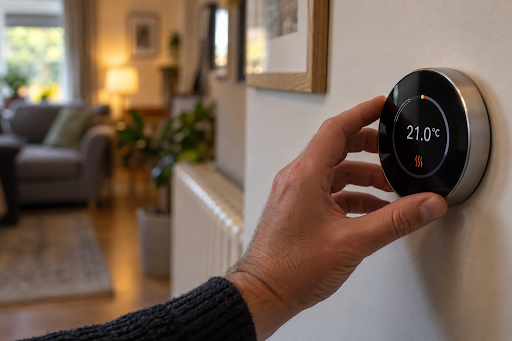
Better heating controls can help reduce heating bills when they prevent your home from being heated unnecessarily. A thermostat cannot change the underlying heat loss of a property, but accurate temperature control, appropriate schedules and room-by-room controls can reduce wasted heating.
Energy Saving Trust recommends setting a room thermostat to the lowest comfortable temperature for your needs, which for most people is between 18°C and 21°C.
Programmers can also prevent the heating from operating while it is not needed, while thermostatic radiator valves regulate the amount of hot water entering individual radiators.
Smart controls add another layer of flexibility. Remote adjustment, geofencing and intelligent scheduling can make it easier to match heating operation to occupancy.
The important point is that the technology itself does not guarantee savings. Energy efficiency depends on how the controls are configured and used, as well as the boiler, insulation, radiators and wider heating system.
What Is the Difference Between a Room Thermostat and Thermostatic Radiator Valves?
A room thermostat controls whether the central heating system needs to produce heat, whereas thermostatic radiator valves regulate the flow of hot water through individual radiators. Used together, they provide whole-system and room-level temperature control.
A standard room thermostat usually represents the temperature in one location. Once that room reaches the set temperature, the thermostat stops calling for heat.
A thermostatic radiator valve, or TRV, works differently. It responds to the temperature around an individual radiator and reduces the flow of hot water when that room reaches the selected level.
This allows you to keep frequently used rooms comfortable while setting unused rooms lower.
Smart radiator valves develop this idea further by allowing compatible systems to create individual schedules or heating zones.
What Are Load Compensation and Weather Compensation?
Load compensation and weather compensation are advanced heating controls that can alter boiler flow temperature according to heating demand. Load compensation responds to the difference between the current indoor temperature and the desired temperature, while weather compensation adjusts operation according to outside conditions.
Instead of simply switching the boiler between full demand and no demand in the same way as a basic control, compatible advanced controls can help the boiler respond more closely to what the property actually needs.
With load compensation, the system considers how close the home is to its set temperature and can adjust boiler operation accordingly.
Weather compensation uses the outside temperature to help determine the appropriate boiler flow temperature. When conditions are milder, the heating system may not require water to be heated to the same temperature as it would during a cold winter period.
Whether these controls are available depends on the boiler and control system, so compatibility should be checked before installation.
Will Any Thermostat Work With Any Boiler?
No. Thermostat compatibility varies between boilers, control systems and thermostat manufacturers. Before buying a thermostat, check the boiler model, existing wiring and controls, whether you have a combi, system or regular boiler, and whether the proposed thermostat supports the communication method required by your boiler.
This becomes particularly important with advanced smart controls and features such as load compensation.
The type of boiler also affects what needs to be controlled.
A combi boiler provides hot water on demand and therefore does not normally require a separate hot water cylinder schedule.
A system or regular boiler may work with a hot water cylinder, so the control arrangement can include heating, hot water and a cylinder thermostat.
Properties divided into two heating zones can require additional controls again.
Checking compatibility before buying prevents you from choosing an impressive thermostat that cannot deliver its intended features with your existing system.
Where Should a Room Thermostat Be Installed?
A room thermostat should be positioned where it can measure a representative room temperature without being distorted by nearby heat sources, draughts or restricted airflow. Its position matters because inaccurate temperature readings can cause the central heating to switch on or off at inappropriate times.
Avoid treating thermostat location as purely a matter of convenience.
For example, placing a temperature sensor next to a radiator can make it detect heat before the rest of the room has reached the desired temperature. Furniture or curtains can also restrict airflow around a thermostat.
Wireless thermostats offer more positioning flexibility, but they still need an appropriate location and reliable communication with the receiver.
Should You Replace an Old Heating Thermostat?
Thermostat replacement can be worthwhile if your existing control is inaccurate, unreliable, difficult to programme or no longer gives you the level of heating control you need. An upgrade can also make sense when changing your boiler or redesigning your central heating system.
Warning signs that your controls deserve attention include heating that continues beyond the set temperature, a thermostat that does not appear to trigger the boiler correctly, unreliable wireless communication or controls that no longer suit your routine.
However, a heating problem is not always caused by the thermostat.
A fault elsewhere in the boiler or central heating system can produce similar symptoms. If the heating is not responding correctly, proper diagnosis is preferable to replacing components by guesswork.
Do You Need a Heating Engineer to Install a Boiler Thermostat?
Professional thermostat installation is advisable where the work involves boiler connections, electrical wiring, diagnosing an existing fault or configuring advanced heating controls. A heating engineer can check thermostat compatibility, assess the existing system and make sure the new control communicates correctly with the boiler.
This is especially valuable when moving from basic heating controls to a smart or multi-zone system.
At WPJ Heating, our engineers work with boilers and heating systems across South and West London. Our team is trained in controls including Honeywell and Danfoss, as well as smart heating technologies such as Evohome, Nest, Wave and Heatmiser.
We can assess the boiler, existing thermostat and wider heating system before recommending an appropriate control rather than treating the thermostat as an isolated device.
Choosing Heating Controls for a London Home
The right heating controls should make your home easier to keep comfortable while giving you appropriate control over when and where energy is used.
For straightforward requirements, a digital or programmable room thermostat may be all you need. If running new cables would be disruptive, a wireless thermostat can provide greater installation flexibility. For changing routines, remote access and more advanced heating zones, a compatible smart thermostat may be the better option.
The important word is compatible. Your boiler, property layout, hot water arrangement, radiators and existing controls all influence which system will work best.
If you are considering thermostat replacement or upgrading your heating controls in London, WPJ Heating can assess your existing system and recommend suitable options for your home.